
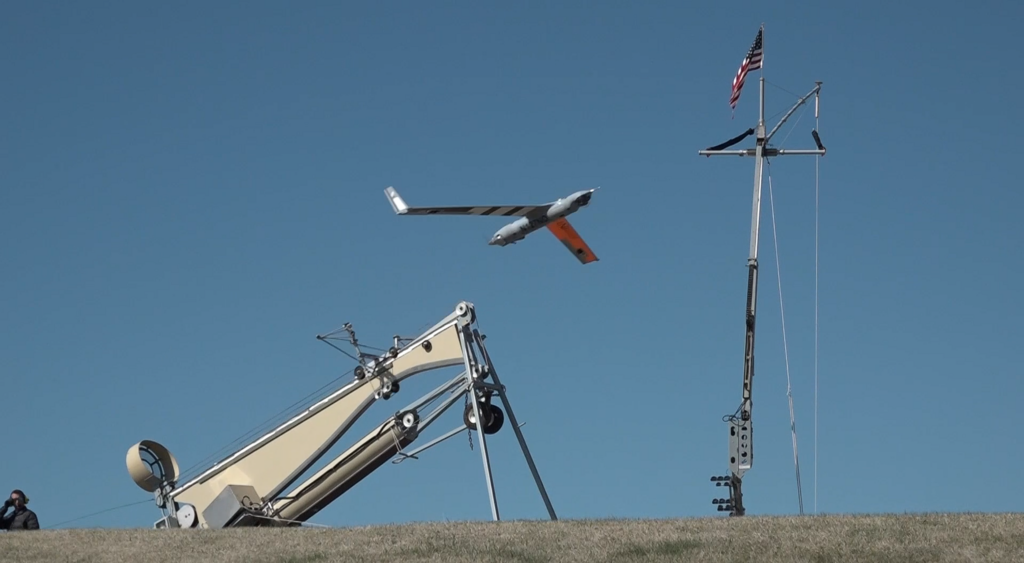
Vigilant Aerospace Systems supported a National Guard emergency management exercise at Camp Grafton Training Center near Devils Lake, North Dakota last week. The exercise brought together the University of North Dakota School of Aerospace Sciences (UND Aerospace), public safety agencies, military personnel, and federal observers. Vigilant Aerospace’s FlightHorizon TEMPO and FlightHorizon DEFENDER systems were integrated with multiple radars and air traffic control receivers to display a real-time picture of the airspace and air traffic throughout the event.
Vigilant Aerospace’s Director of Operations Kendyn Webster and Director of Business Development Zach Peterson observed firsthand how FlightHorizon software was used across multiple organizations in an emergency management scenario.
The demonstration supported UND Aerospace’s effort to build a common operating picture across participating agencies, aircraft and response assets to increase safety and coordination of crewed and uncrewed aircraft.
One major event participant was Professor Paul Snyder, Assistant Chair and the Director of Uncrewed Aircraft System (UAS) Programs for the John D. Odegard School of Aerospace Sciences, who also serves as the Lead for Autonomous Platforms at the University of North Dakota. Snyder said about Vigilant’s involvement:
“As we work together with federal, state, local, and tribal first responders, it was great to have support from Vigilant Aerospace. They help integrate our radars and other sensors into their common operating picture to give us greater situational awareness for traffic management between crewed and uncrewed aircraft”
Vigilant Aerospace’s participation is part of it’s partnership with UND Aerospace that supports UAS education, research and training through FlightHorizon software. The Camp Grafton exercise builds on earlier collaboration with UND Aerospace at Gorman Field UAS Test Range, where the company demonstrated FlightHorizon TEMPO for military UAS training.
UND Aerospace also has a partnership with the North Dakota Air and Army National Guard to support counter-uncrewed aircraft systems and advanced air mobility initiatives, including joint training exercises at Gorman Field UAS Test Range and Camp Grafton Training Center.
Other participants in the exercise included the North Dakota Air National Guard, the North Dakota Department of Emergency Services, Ramsey County emergency response personnel, and the Grand Forks First Responder Water Team. NASA and the Air Force Research Laboratory (AFRL) also participated.
Search-and-Rescue Training With Live Airspace Awareness
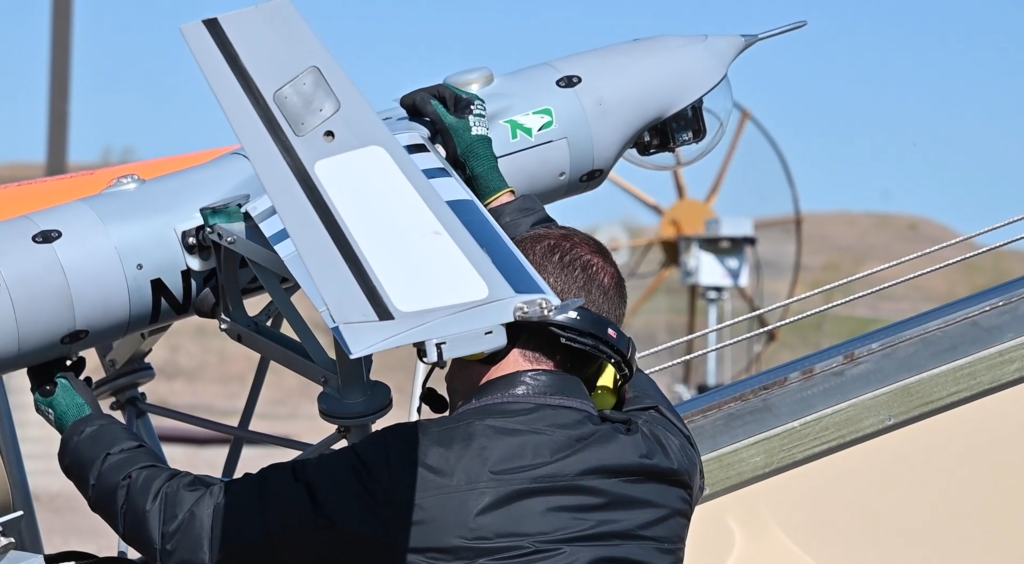
The exercise used search-and-rescue scenarios built around missing-person events. Participants received mission briefs and deployed teams using multiple crewed and uncrewed search and rescue aircraft according to their assigned capabilities.
Ground teams, aviation teams and public safety personnel responded to several evolving scenarios with a command trailer serving as a coordination point for the exercises. Some teams searched for hidden dummies. Other scenarios used university students and bloodhounds to simulate live missing-person searches.
The scenarios created a practical training environment for emergency management and also highlighted the challenge of airspace coordination. Search-and-rescue missions often involve low-altitude aircraft, helicopters, UAS / drones and ground teams working closely together which creates risk when multiple aircraft operate near the same incident location.
Kendyn Webster, Director of Operations at Vigilant Aerospace, described why real-time air traffic visibility is important in these environments:
“As drones enter the national airspace, real-time airspace visibility becomes critical to emergency management operations. The ability to see aircraft and make deconfliction decisions can help turn a search-and-rescue operation into a rapid success while reducing mission risk.”
Vigilant Aerospace’s FlightHorizon helped provide the aircraft tracking and airspace awareness needed to support those deconfliction decisions.
FlightHorizon TEMPO Providing Airspace Management for Search and Rescue and Emergency Response Operations
FlightHorizon TEMPO was demonstrated as a ground-based airspace awareness tool during the exercise.
The exercise included a mix of crewed aircraft, UAS, simulated aircraft and ground-based response assets. These included fixed-wing, rotary-wing and small drone aircraft, along with field response teams and other supporting personnel.
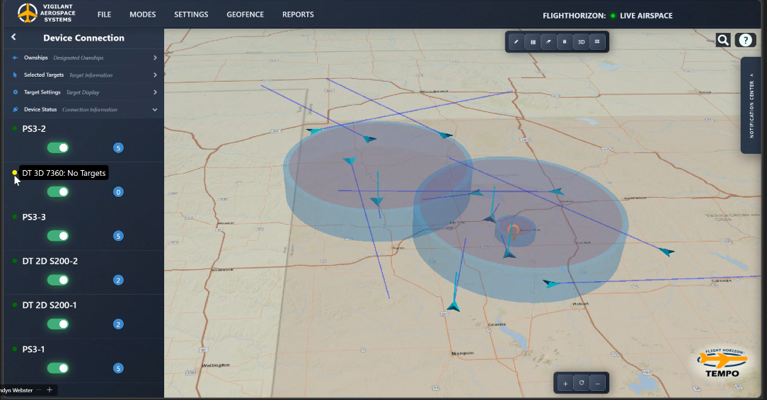
Vigilant Aerospace provided radar data and correlated ADS-B data to show aircraft positions in real time. FlightHorizon TEMPO displayed that information in a 3D airspace picture, helping participants understand low-altitude aircraft activity during the exercise.
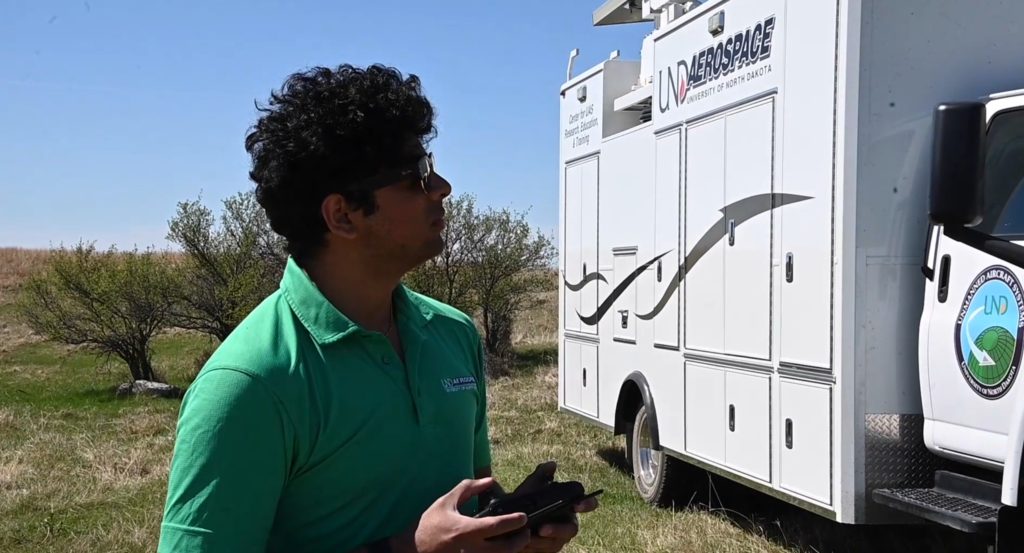
FlightHorizon TEMPO is designed as a ground-based air traffic awareness and management platform. It can integrate inputs including radar, ADS-B In, Remote ID and UAS telemetry.
The system includes built-in automatic detect-and-avoid (DAA) services to support beyond visual line of sight (BVLOS) flight of UAS and coordination of advanced airspace integration.
FlightHorizon DEFENDER for Drone Tracking and Coordination
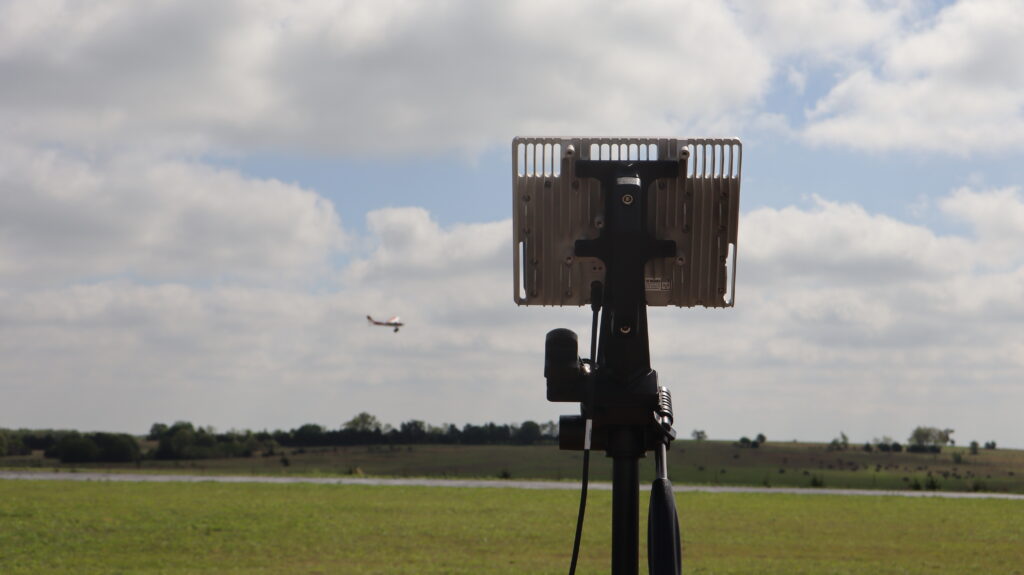
FlightHorizon DEFENDER, Vigilant Aerospace’s counter-uncrewed aircraft system (C-UAS) platform for airspace monitoring, identification and alerting, was also shown at the exercise. It is designed for fixed or portable use and is focused on detecting and tracking drones. At the Camp Grafton event, it supported launch area safety and deconfliction for the launching of military drones. In this type of exercise, UAS operators need to know whether nearby aircraft could affect launch timing, recovery, ground safety or mission coordination.
FlightHorizon DEFENDER helped show how field teams can use real-time aircraft and UAS tracking and alerting to make those decisions near a launch site, rather than relying only on visual observation or radio coordination.
The system can use radar, ADS-B In, and Remote ID inputs to helps operators identify known and unknown aircraft, track aircraft movement and receive alerts when aircraft approach geofenced areas.
Supporting Safer Multi-Agency UAS Operations
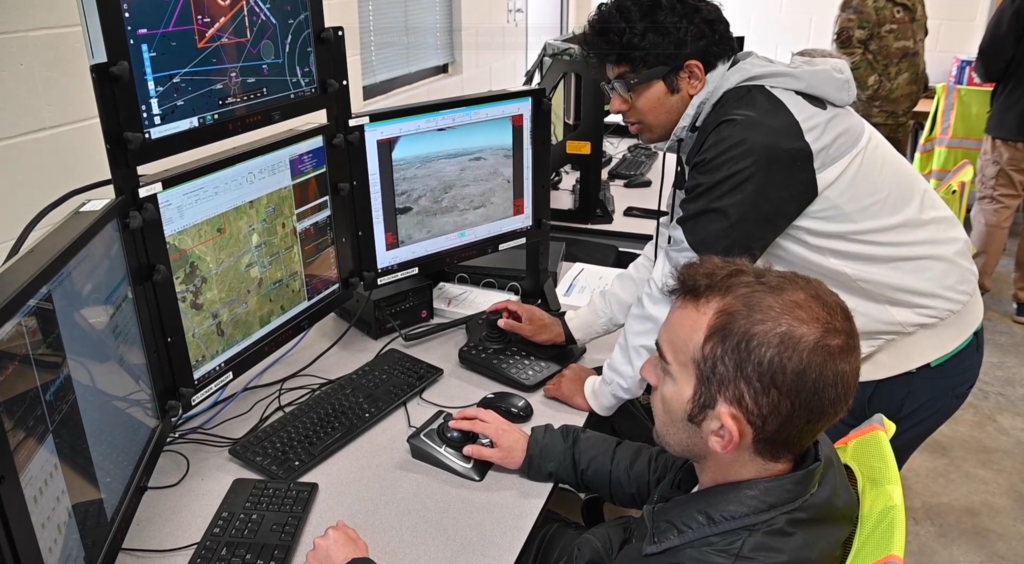
The Camp Grafton exercise demonstrated the need for and practical field application of airspace management and DAA for integrated crewed and uncrewed operations. Emergency response environments increasingly incorporate both autonomous and crewed aircraft, and first responders need reliable tools for airspace management and deconfliction.
Vigilant Aerospace’s participation illustrated how FlightHorizon TEMPO and FlightHorizon DEFENDER can support airspace monitoring and deconfliction in training and response environments. For emergency management, public safety teams need drones for search, mapping or incident response. Helicopters operate at low altitude in the same airspace. Ground teams need updates from both. FlightHorizon TEMPO helps operators see all air traffic, understand relative aircraft positions and make better coordination and deconfliction decisions.
Vigilant Aerospace Partnership with UND Aerospace
Vigilant Aerospace Systems partnered with UND Aerospace in January 2025 to provide airspace management at Gorman Field, the school’s drone test range. The partnership gives UND Aerospace access to FlightHorizon software for UAS education, research and training, including airspace awareness, “detect-and-avoid” (DAA) and autonomous flight safety applications. That work provides a technical foundation for classroom instruction, research activity and field demonstrations involving crewed and uncrewed aircraft.
At Gorman Field UAS Test Range, FlightHorizon TEMPO is deployed with on-field radar to support live aircraft tracking, airspace management, flight demonstrations and UAS training. The Camp Grafton exercise involved similar airspace awareness needs in an emergency management setting, where public safety agencies, military personnel and multiple airspace users needed to understand low-altitude aircraft activity in real time.
About UND Aerospace
UND Aerospace represents the partnership between the UND Aerospace Foundation and the University of North Dakota John D. Odegard School of Aerospace Sciences. The John D. Odegard School of Aerospace Sciences is the second-largest degree-granting college at UND and operates one of the largest fleets of civilian aircraft in North America.
UND Aerospace supports aviation, uncrewed aircraft systems, space studies, atmospheric sciences, and related aerospace research and education. Its Gorman Field UAS Test Range provides facilities for UAS testing and training, including BVLOS testing support, electronic observer capabilities, aircraft modification space, flight planning space, and outdoor launch infrastructure.
 Vigilant Aerospace is the leading developer of multi-sensor detect-and-avoid and airspace management software for uncrewed aircraft systems (UAS or drones). The company’s product, FlightHorizon, is based on two NASA patents and uses data from multiple sources to display a real-time picture of the air traffic around a UAS and to provide automatic avoidance maneuvers to prevent collisions. The software is designed to meet industry technical standards, to provide automatic safety and to allow UAS to safely fly beyond the sight of the pilot. The software has won multiple industry awards and the company has had contracts and users at NASA, the FAA, the U.S. Department of Defense and with a variety of drone development programs. Visit our website at www.VigilantAerospace.com