
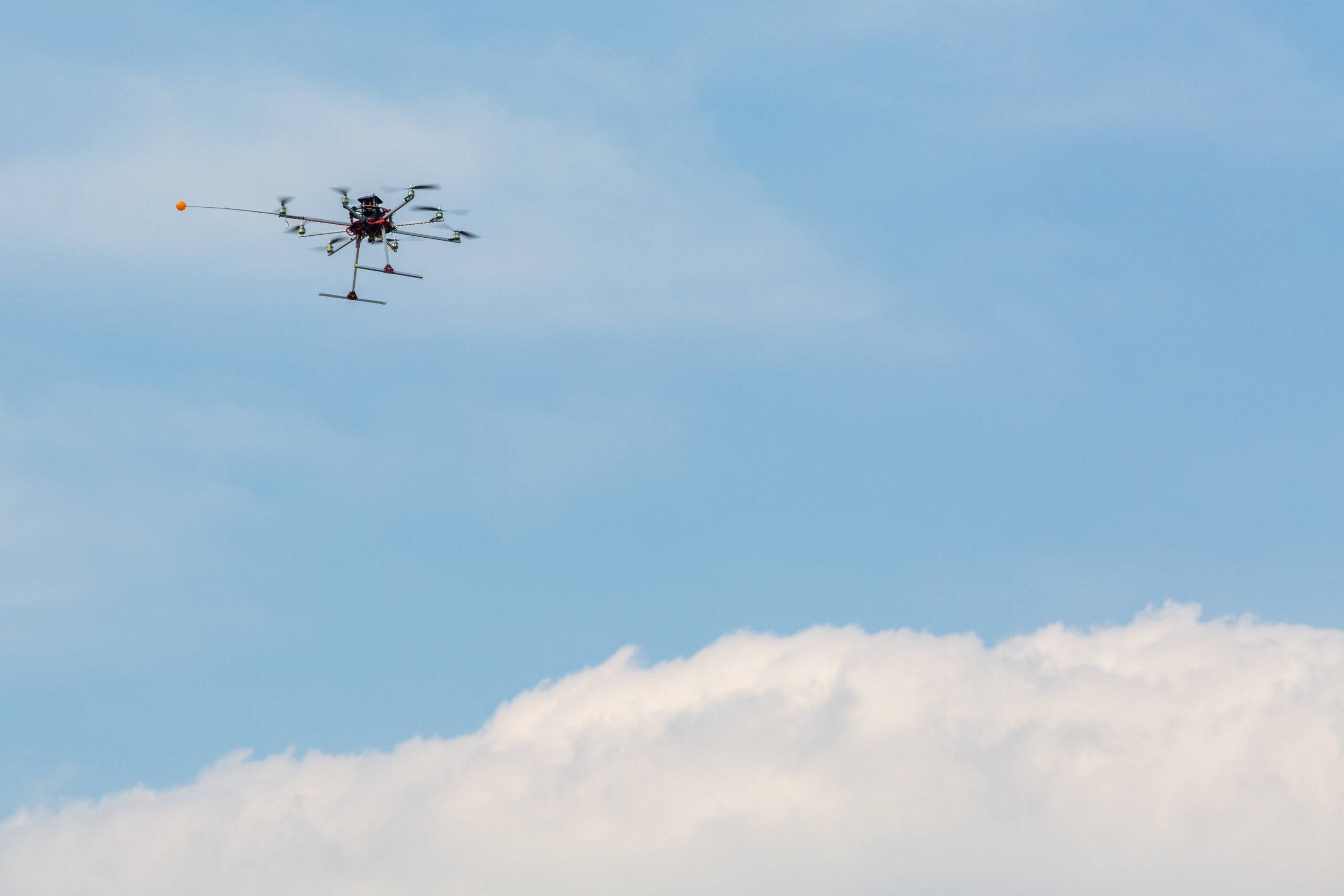
Vigilant Aerospace Systems’ FlightHorizon platform has been selected to support beyond visual line of sight (BVLOS) flight operations for a National Oceanic and Atmospheric Administration (NOAA) and Oklahoma State University College of Engineering, Architecture and Technology drone-based weather data collection project. The multi-year effort is scheduled to run from 2025 through 2027 and will support operations in Oklahoma and Virginia.
The project focuses on improving the operational readiness of uncrewed aircraft system (UAS) technologies for routine, scalable weather data collection. The objective is to enhance early detection and forecasting of severe weather events by expanding the use of high-resolution atmospheric data collected by uncrewed aircraft. The work involves collaboration among NOAA, academic research partners, the National Weather Service (NWS), and Vigilant Aerospace.
BVLOS Operations in Controlled Airspace
The project is designed to support high-altitude weather data collection flights at altitudes of up to 10,000 feet. Operations will be conducted under a Federal Aviation Administration (FAA) Certificate of Authorization (COA) and require air traffic surveillance to enable safe UAS operations in controlled airspace. The effort is intended to demonstrate how small uncrewed aircraft can be integrated into the National Airspace System (NAS) to augment the NWS’s weather data acquisition capabilities.
Project flight operations are expected to include portions of Class B airspace. Class B airspace typically surrounds the nation’s busiest airports and represents one of the most highly regulated operating environments in the NAS. Operations in this airspace require a high level of compliance, coordination, and situational awareness.
Vigilant Aerospace will provide air traffic surveillance and airspace management using its FlightHorizon TEMPO platform deployed on a mobile system. The system will use radar-based detection to support “detect-and-avoid” (DAA) functions during these BVLOS operations. Explains Vigilant Aerospace CEO Kraettli L. Epperson:
“This is an important opportunity to operationalize the systems and integrations that we initially developed under the NASA ULI WindMap project for actual end-users building out the most advanced weather observation system in the United States. This is also testing in some of the most demanding environments and air spaces imaginable so we are very honored to have been selected.”
Project Architecture and Data Collection
NOAA plans to use “drone-in-a-box” systems to support remote, fully autonomous UAS launch and recovery. These systems are intended to enable hourly weather data collection without the need for on-site personnel. Within this architecture, FlightHorizon TEMPO will provide distributed, networked airspace management and detect-and-avoid capabilities using radar, with integration into unmanned aircraft system traffic management (UTM) services.
The system will ingest multiple data sources at the launch site, including FAA data feeds, ADS-B In information, and live local radar data. This integrated airspace picture is intended to support safe, repeatable BVLOS operations alongside other airspace users.
Technical and Regulatory Objectives

Technical objectives of the project include establishing standards for data accuracy, evaluating platform limitations in adverse weather, and integrating UAS-collected data into existing weather modeling workflows. The project will also evaluate how UAS sensor data can be formatted and ingested in near real time to improve forecasting ability.
Regulatory objectives focus on enabling BVLOS operations without visual observers, including DAA performance for flights up to 10,000 feet and operations in low-visibility conditions. The project also includes evaluation of remote and unattended operations using an autonomous “weatherhive” deployment concept.
Additional objectives include demonstrating compliance with FAA requirements for operations over populated areas. The project is expected to leverage FAA-approved compliance methods developed by Virginia Tech to support operational approval.
Over the course of the three-year effort, the project aims to advance defined Technology Readiness Levels (TRLs), with the goal of demonstrating a UAS swarm system capable of operating at TRL 7 in support of real-time weather data acquisition for NOAA stakeholders.
Flight testing is expected to occur at multiple locations in Oklahoma and Virginia.
About the National Oceanic and Atmospheric Administration (NOAA)
The National Oceanic and Atmospheric Administration is a U.S. federal agency within the Department of Commerce. NOAA is responsible for weather forecasting, climate monitoring, ocean and atmospheric research, and environmental data stewardship. The agency operates the National Weather Service and supports research and operational programs that improve understanding of weather and climate systems.
About Oklahoma State University College of Engineering, Architecture and Technology
Oklahoma State University’s College of Engineering, Architecture and Technology is a multidisciplinary academic unit that supports education and research across engineering, architecture, and applied technology fields. The college conducts research in areas including aerospace systems, atmospheric science, uncrewed aircraft operations, and advanced sensing technologies, and works with government and industry partners on applied research and workforce development initiatives.

 Vigilant Aerospace is the leading developer of multi-sensor detect-and-avoid and airspace management software for uncrewed aircraft systems (UAS or drones). The company’s product, FlightHorizon, is based on two NASA patents and uses data from multiple sources to display a real-time picture of the air traffic around a UAS and to provide automatic avoidance maneuvers to prevent collisions. The software is designed to meet industry technical standards, to provide automatic safety and to allow UAS to safely fly beyond the sight of the pilot. The software has won multiple industry awards and the company has had contracts and users at NASA, the FAA, the U.S. Department of Defense and with a variety of drone development programs. Visit our website at www.VigilantAerospace.com