
At XPONENTIAL 2024, Vigilant Aerospace Systems CEO Kraettli L. Epperson participated in a Defense Theater session examining real-world detect-and-avoid (DAA) development for large uncrewed aircraft systems (UAS), advanced air mobility (AAM), and military platforms. The joint presentation with Leo McCloskey, VP of Marketing for Echodyne, focused on practical system architectures, standards alignment, and certification considerations shaping current DAA deployments.
The session addressed how DAA requirements are evolving as regulators and operators move toward routine beyond visual line of sight (BVLOS) operations. Emphasis was placed on deployable systems that integrate with existing airspace management frameworks while supporting both civil and defense missions.
FlightHorizon DAA Architecture
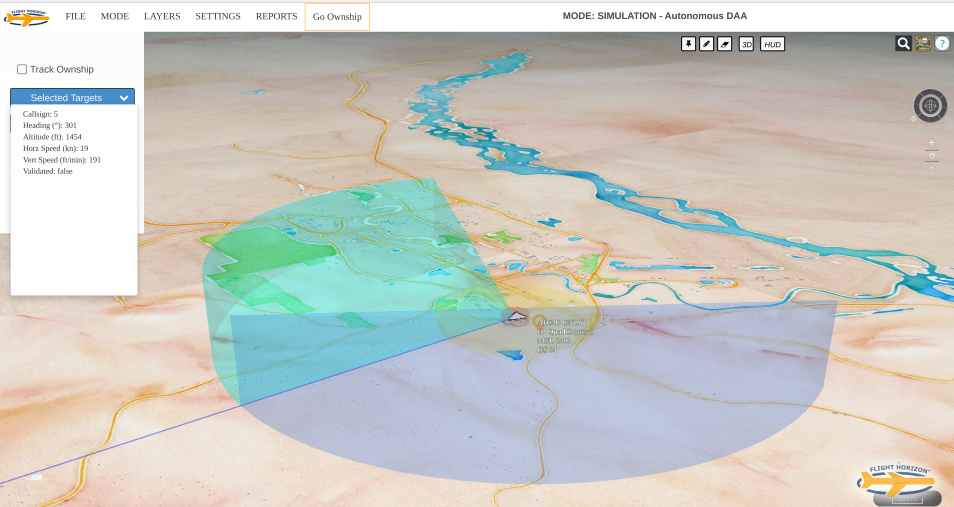
DAA System Anatomy
Vigilant Aerospace outlined the design and operational use of FlightHorizon, a standards-based DAA system derived from two NASA patents. The system supports onboard, ground-based, and cloud-hosted configurations and has been applied across programs with NASA, the Federal Aviation Administration (FAA), UAS test sites, and U.S. Air Force initiatives.
Two primary deployment models were discussed:
- Ground-based DAA, which combines radar sensors, transponder receivers, and real-time FAA data with airspace services such as flight information management systems (FIMS) and discovery and synchronization services (DSS).
- Onboard DAA, which integrates radar, ADS-B transponder reception, and flight control interfaces to support well-clear monitoring and near mid-air collision alerts without reliance on ground infrastructure.
Both approaches were presented as complementary, with architecture selection driven by mission type, spectrum availability, and certification pathway.
Standards, Certifications, and Open Questions
The presentation highlighted alignment with established DAA standards, including ACAS X variants, RTCA DO-365B and DO-366, and ASTM F3442. Discussion focused on how these standards inform system performance, pilot interfaces, and approval strategies.
Key questions raised during the session included spectrum management for active sensors, certification of ground control stations, and the growing interest in onboard DAA driven by regulatory and market shifts. Speakers also addressed how advances in sensor performance and processing capability are influencing DAA system integration decisions.
The session underscored the need for standards-based, scalable DAA implementations as large UAS and AAM operations expand into more complex airspace.
See the full presentation below:
Full Presentation
About Echodyne
Echodyne is a radar technology company that develops solid-state, electronically steered radar systems for defense, aerospace, and uncrewed systems applications. Its radar products are designed to provide high-performance detection and tracking in compact, low-power form factors suitable for mobile and embedded platforms.
About XPONENTIAL
XPONENTIAL is the annual conference and exhibition organized by the Association for Uncrewed Vehicle Systems International (AUVSI). The event brings together industry, government, and research stakeholders to examine technical, regulatory, and operational developments in uncrewed systems, autonomy, and robotics across air, land, and maritime domains.
 Vigilant Aerospace is the leading developer of multi-sensor detect-and-avoid and airspace management software for uncrewed aircraft systems (UAS or drones). The company’s product, FlightHorizon, is based on two NASA patents and uses data from multiple sources to display a real-time picture of the air traffic around a UAS and to provide automatic avoidance maneuvers to prevent collisions. The software is designed to meet industry technical standards, to provide automatic safety and to allow UAS to safely fly beyond the sight of the pilot. The software has won multiple industry awards and the company has had contracts and users at NASA, the FAA, the U.S. Department of Defense and with a variety of drone development programs. Visit our website at www.VigilantAerospace.com