
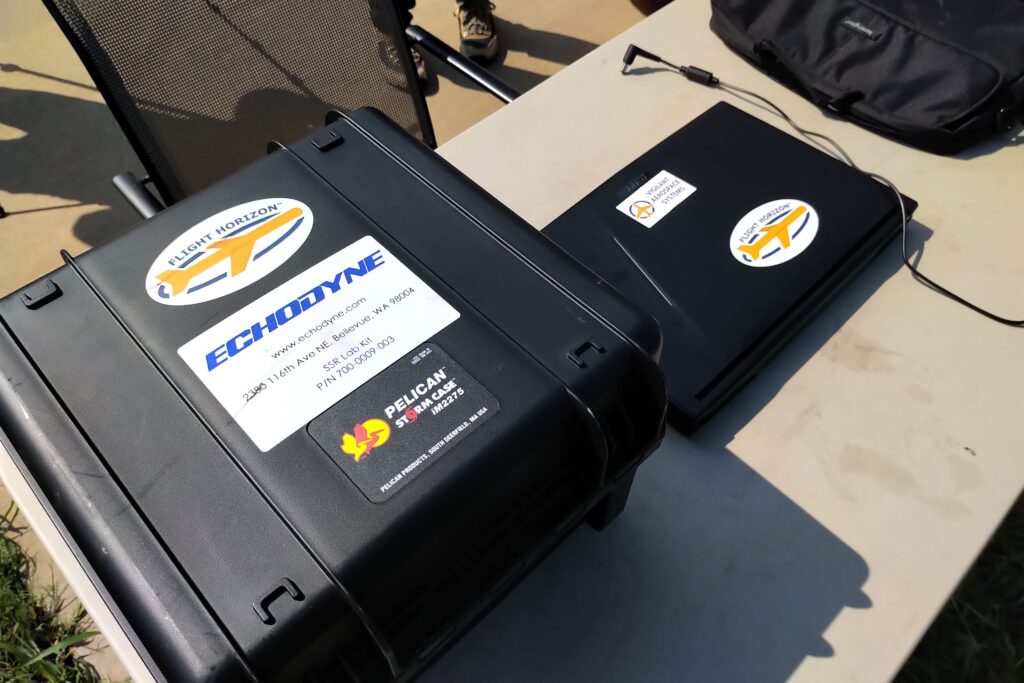
This guest article is contributed by Echodyne, a radar technology company and Vigilant Aerospace industry partner since 2019, supporting advanced UAS airspace awareness.
What Does Airspace Management Mean?
While it might appear that the pace of ‘Unmanned Aircraft Systems’ (UAS) and ‘Advanced air mobility’ (AAM) is quite slow, this belies a tremendous amount of energy and capital moving towards uncrewed and, increasingly, autonomous systems. While this energy and capital is diffused across water, ground, and air domains, the growth of systems and capabilities for UAS and AAM is significant enough to begin planning for aircraft density and more demanding airspace management.
The traditional methods – ADS-B receivers and air traffic control visual observers – are no longer enough. Imagine thousands of UAS or AAM in the air, traversing in and out of cities or bases. Picture swarms of UAS around a disaster recovery operation with compromised visuals. And, while we applaud the FAA for recent changes for Public Safety agencies to receive rapid approval for flights under two hundred feet above ground (<200’ AGL), this also demonstrates the growing gap in airspace management.
Essentially, there are two distinct regulatory approaches that must be harmonized into a single strategic plan for airspace management. The first approach includes the UAS and AAM markets, as well as the work in standards bodies (RTCA, ASTM) for ground stations and ‘UAS Traffic Management’ (UTM) systems. The primary focus of these ground stations is deconfliction with crewed aircraft, not comprehensive airspace management. The second approach is built on securing the airspace from drones used by terrorist or non-state actors. The primary focus of these ground stations is tracking all uncrewed aircraft, not comprehensive airspace management. Yet it is precisely airspace management that is required to satisfy the needs of both approaches, which brings the focus and importance to managing airspace density through UTM software.
The Next Generation of Airspace Management
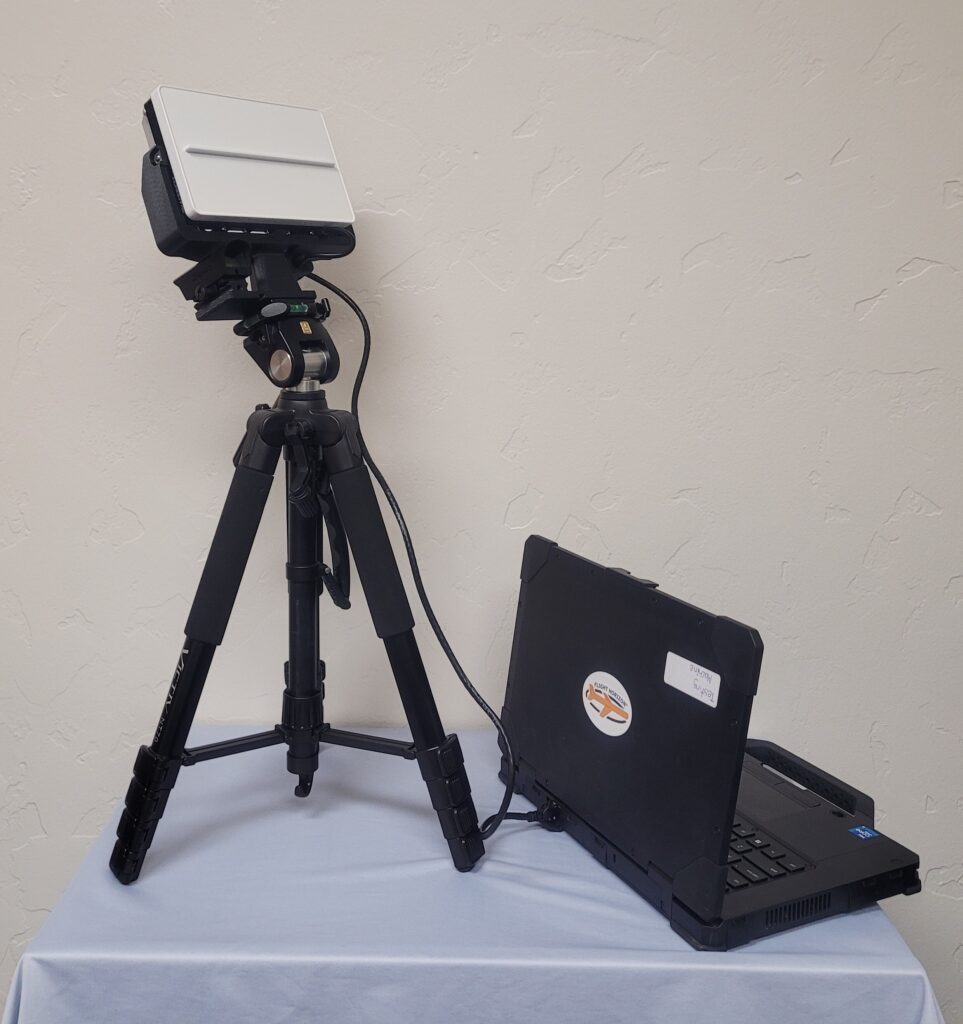
Vigilant Aerospace’s FlightHorizon is being selected for situations where extremely robust airspace management of autonomous aircraft is required, frequently integrated into the National Airspace (NAS).
Whether it’s dedicated droneports, drone corridors, regional airports, battlespace or research areas, FlightHorizon can be quickly set up to provide the airspace traffic management necessary.
And with powerful, uncrewed autonomous systems, the demand for powerful, adaptable airspace awareness has followed. This requires an equally robust radar to provide the sensing data necessary.
Vigilant Aerospace and Echodyne have worked together since 2019, when Vigilant Aerospace bought its first EchoGuard radar for testing its uncrewed flight management (UTM) software, FlightHorizon, during a project with Oklahoma State University (OSU). Ever since, we’ve found both the Echodyne team and its products to be technically savvy and very reliable.
EchoGuard is Echodyne’s powerful short-range, ultra-low SWaP format radar, ideal for establishing specific airspace awareness areas. Its lightweight (just over a kilogram), compact design allows it to be moved quickly and easily to set up immediate airspace awareness. It can literally be carried by hand, or in a backpack, affixed to a vehicle or rooftop. This makes EchoGuard’s SWaP perfect for applications that require high levels of portability and rapid deployment.
Echodyne offers two ground radars: EchoGuard and EchoShield, a medium-range pulse-Doppler radar, and one airborne radar, EchoFlight, to support BVLOS operations for scaling UAS operations safely. Vigilant Aerospace utilized Echodyne’s radars for ground-based detect and avoid systems (GBDAA) and for onboard systems to detect non-cooperative targets.
Building the safety plan for each ConOps requires diligence in testing and planning, and it is imperative that the sensors and software create a detailed operational plan that works reliably each and every time. Vigilant Aerospace has been able to depend on Echodyne’s technology and team for its groundbreaking UTM efforts.
Examples
ACUASI
In 2021, both EchoGuard and EchoFlight were instrumental in Vigilant Aerospace’s FAA contract testing with the University of Alaska Fairbanks and the Alaska Center for UAS Integration (ACUASI). The effective range of both radars was confirmed at around five kilometers, with successful BVLOS test flights on UAS. After more than six months of field tests, in challenging conditions, the radars proved to be durable and capable beyond their advertised performance.

Air Force Research Laboratory
EchoFlight was used as the primary onboard radar for our Air Force Research Laboratory (AFRL) contract, providing forward-facing coverage for detection of non-cooperative aircraft.
Today, EchoFlight Radar is the most tested airborne radar system that Vigilant Aerospace uses.
Vigilant Aerospace CEO Kraettli Epperson explains:
“The Echodyne radars have always provided a stable, reliable solution with a user-friendly interface, and have provided essential in the testing programs we’ve undertaken with the likes of AFRL and the University of Alaska Fairbanks. They provide the high levels of awareness and identification required for these advanced UAS tests, often in challenging environments and altitudes.”
Echodyne CEO Eben Frankenberg adds,
“Vigilant Aerospace has been an Echodyne customer since the early days,” commented Eben Frankenberg, Echodyne CEO. “The team at Vigilant have developed one of the leading UTM platforms that turns the precision airspace data generated by our portfolio of commercial ESA radars into an incredibly detailed view of airspace operations.”
Frankenberg went on to say
“Vigilant Aerospace remains one of only a handful of companies working on the onboard DAA problem for mid-sized and larger drones, and the only one with a compact and low-cost solution in FlightHorizon.“
Conclusion
Autonomous flights offer some amazing opportunities for commercial, public and security organizations – if they can scale operations safely. As the miniaturization of technologies continues, Echodyne’s powerful radars provide a necessary and detailed view of airspace activity.
About Echodyne

Echodyne, the radar platform company, is a U.S. designer and manufacturer of advanced radar solutions for defense, government, and commercial market applications. The company’s proprietary metamaterials electronically scanned array (MESA®) architecture is a rare breakthrough in advanced radar engineering. Echodyne’s innovative MESA radars use standard materials and manufacturing processes to shatter unit cost barriers for high performance radar. The result is a solid-state, low-SWaP, exportable, commercial radar with advanced software capabilities that delivers superior performance, unparalleled data integrity, and exceptional situational awareness. Privately held, the company is backed by Bill Gates, NEA, Madrona Venture Group, Baillie Gifford, Northrop Grumman, and Supernal, among others.
 Vigilant Aerospace is the leading developer of multi-sensor detect-and-avoid and airspace management software for uncrewed aircraft systems (UAS or drones). The company’s product, FlightHorizon, is based on two NASA patents and uses data from multiple sources to display a real-time picture of the air traffic around a UAS and to provide automatic avoidance maneuvers to prevent collisions. The software is designed to meet industry technical standards, to provide automatic safety and to allow UAS to safely fly beyond the sight of the pilot. The software has won multiple industry awards and the company has had contracts and users at NASA, the FAA, the U.S. Department of Defense and with a variety of drone development programs. Visit our website at www.VigilantAerospace.com