
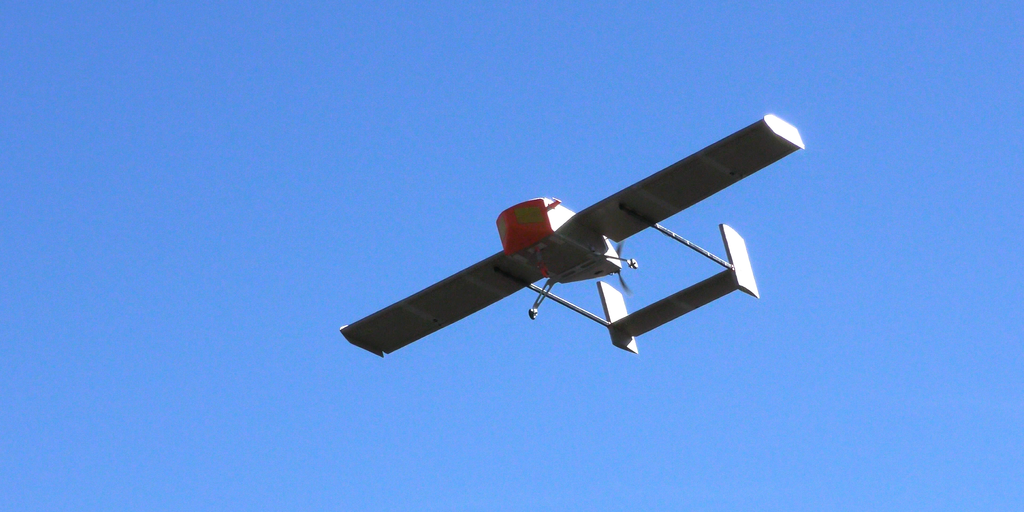
Vigilant Aerospace Systems is advancing a commercial configuration of its FlightHorizon PILOT-M onboard detect-and-avoid (DAA) system through testing with Oklahoma State University’s Oklahoma Aerospace Institute for Research and Education (OAIRE). The latest work involves a custom fixed-wing test aircraft designed to accommodate two onboard radars, supporting the project’s goal of bringing multi-radar DAA capabilities to smaller commercial uncrewed aircraft systems (UAS).
Smaller fixed-wing UAS provide an excellent test platform for advanced safety systems like FlightHorizon PILOT-M and serve as valuable demonstrators and proxies for larger commercial fixed-wing UAS that conduct important missions like infrastructure inspection, flood and fire response, construction and energy monitoring and similar flights. The availability of onboard non-cooperative detect-and-avoid solutions can help to advance the industry and pave the way for safe long-range flights.
The aircraft was designed and built by a team at OSU OAIRE led by research aerospace engineer Dr. Thomas Hays to provide a platform for evaluating the aircraft integration requirements of this configuration. The work is part of Vigilant Aerospace’s previously announced $1 million commercial onboard DAA development project, supported in part by the Oklahoma Center for the Advancement of Science and Technology (OCAST). Hays highlighted how the collaboration brings together the engineering expertise and flight-testing resources needed to advance the project:
“This OCAST project has provided an excellent opportunity to leverage OAIRE’s facilities, expertise, and people to develop a custom aircraft solution for testing Vigilant’s detect-and-avoid system. Partnerships like this—bringing Oklahomans together to develop, fly, and test innovative technologies—represent an exciting path forward for our state and its growing aerospace industry.”
The effort builds on FlightHorizon PILOT-M technology developed for the U.S. Air Force by Vigilant Aerospace under a Direct-to-Phase II SBIR contract. The new demonstration system adapts the DAA system to the mid-sized fixed-wing UAS platform with a more constrained payload capacity. Kraettli L. Epperson, CEO of Vigilant Aerospace, explained the commercial objective:
“We are extending FlightHorizon PILOT-M to smaller commercial UAS that have less space, payload capacity and power available for onboard safety equipment than typical military UAS. Working with OAIRE, we are evaluating an aircraft designed to carry a two-radar configuration, with the objective of demonstrating multi-radar detect-and-avoid on a smaller fixed-wing platform. This work will help expand the range of commercial aircraft that can carry their own capability to detect and avoid nearby air traffic.”
An Aircraft Configured for Multi-Radar DAA
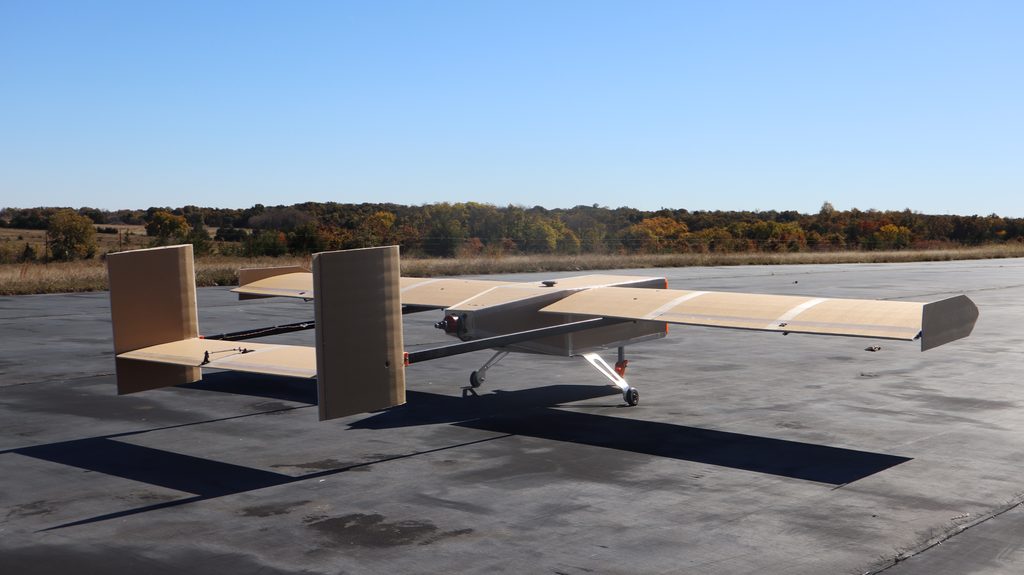
The aircraft demonstrates the ability to provide a fully integrated two radar system on a compact aircraft. The system incorporates FlightHorizon PILOT-M’s autopilot integration, radar feeds and ADS-B in receivers and builds on earlier work in providing onboard processing, radar data filtering and avoidance algorithms.
Accommodating radar-based DAA involves more than finding space for individual sensors. The installation must account for payload distribution, mounting locations, electrical power and the sensors’ intended fields of view. Those requirements must also fit alongside the aircraft’s mission equipment.
The OAIRE platform allows the team to address these integration considerations as part of a commercial aircraft development effort. The broader objective is to demonstrate multiple onboard radars operating with FlightHorizon PILOT-M on a smaller fixed-wing UAS.
How FlightHorizon PILOT-M Supports Onboard Avoidance
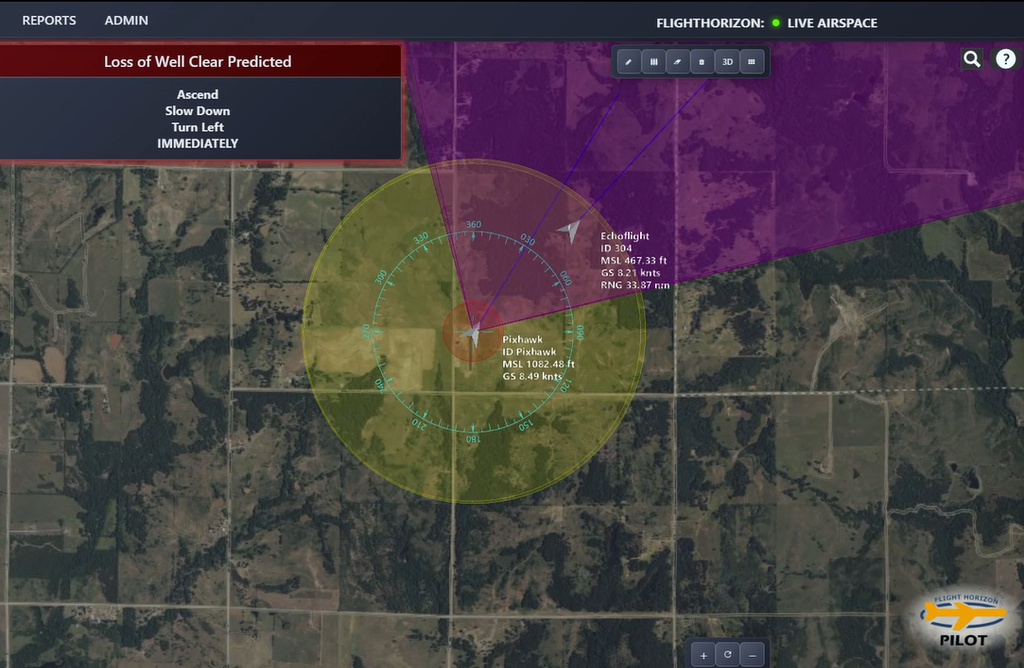
FlightHorizon PILOT-M is an onboard DAA system that combines radar inputs with Automatic Dependent Surveillance–Broadcast In (ADS-B In) traffic information and aircraft telemetry. The software tracks surrounding aircraft, predicts potential conflicts and generates avoidance guidance for a connected autopilot and to send to the remote pilot.
The software and system include not only the onboard processing capability, but also the ability to send data to the ground for display in the FlightHorizon PILOT air traffic display. The remote pilot viewer displays the location of the UAS plus the radar field of regard and any air traffic detected by the onboard system in real time.
Radar provides a means of observing “non-cooperative” traffic: aircraft that do not broadcast their position with a transponder. ADS-B In receivers provide information from “cooperative” aircraft transmitting their position to air traffic control and nearby aircraft.
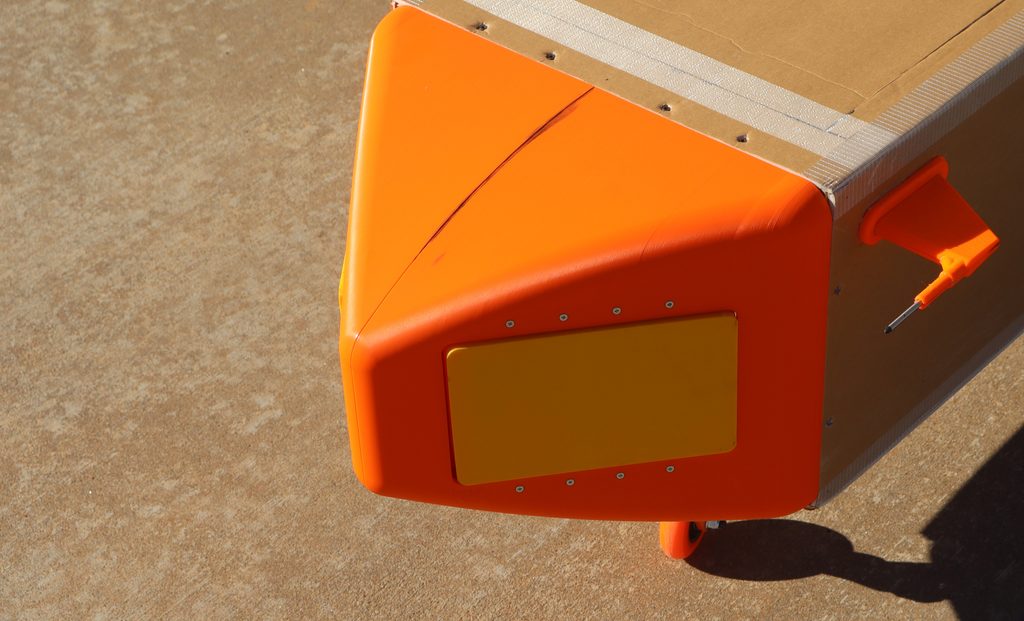
A two-radar configuration can broaden the detection field available to the FlightHorizon system to help meet industry technical and safety standards. The resulting coverage depends on sensor placement and orientation, making aircraft integration an important part of configuring the system for a particular UAS platform.
FlightHorizon PILOT-M performs its DAA processing onboard. Its ground-based viewer supports remote pilot supervision, while logged sensor data and avoidance data support post-flight analysis.
The Big Picture and the Future of Commercial UAS
FlightHorizon PILOT-M is designed to fill a critical gap in both civilian and defense UAS safety. With the expected publication of FAA’s Part 108 rules to allow civilian drones to fly beyond the visual line of sight of the pilot, onboard safety systems are especially urgent. Demonstrating the capability, flexibility and configurability of this system is an important part of filling that gap. While new rules may allow some drones to fly using only transponder receivers for safety, it is expected that many drones that are larger and that are flying in busier airspaces or over higher population density will require a non-cooperative DAA system.
For drone operators, a smaller installation could make onboard radar-based DAA available across more aircraft and mission types. Potential applications include infrastructure inspection, emergency supply delivery and search and rescue, particularly where operations extend beyond visual line of sight or available ground-based surveillance coverage. The OAIRE collaboration supports that objective through aircraft development and testing tailored to the planned commercial configuration.
About OAIRE

The Oklahoma Aerospace Institute for Research and Education at Oklahoma State University supports aerospace research, engineering, education and industry collaboration. Its facilities and technical programs support aircraft development and flight testing, including work involving uncrewed systems.
About OCAST

The Oklahoma Center for the Advancement of Science and Technology supports technology development and commercialization in Oklahoma. Its Industry Innovation Program provides funding for company-led projects with potential commercial applications and economic benefits for the state.
 Vigilant Aerospace is the leading developer of multi-sensor detect-and-avoid and airspace management software for uncrewed aircraft systems (UAS or drones). The company’s product, FlightHorizon, is based on two NASA patents and uses data from multiple sources to display a real-time picture of the air traffic around a UAS and to provide automatic avoidance maneuvers to prevent collisions. The software is designed to meet industry technical standards, to provide automatic safety and to allow UAS to safely fly beyond the sight of the pilot. The software has won multiple industry awards and the company has had contracts and users at NASA, the FAA, the U.S. Department of Defense and with a variety of drone development programs. Visit our website at www.VigilantAerospace.com